


Philadelphia has never been a city that hands out recognition easily.
It is a place where confidence must be supported by ability, where originality is respected but imitation is quickly exposed, and where artists often learn to perform for demanding audiences long before the wider industry discovers them. That environment has produced generations of musicians, actors, comedians, filmmakers, and cultural figures who developed their character away from the comfort of immediate approval.
Handsome Newton belongs to that tradition.
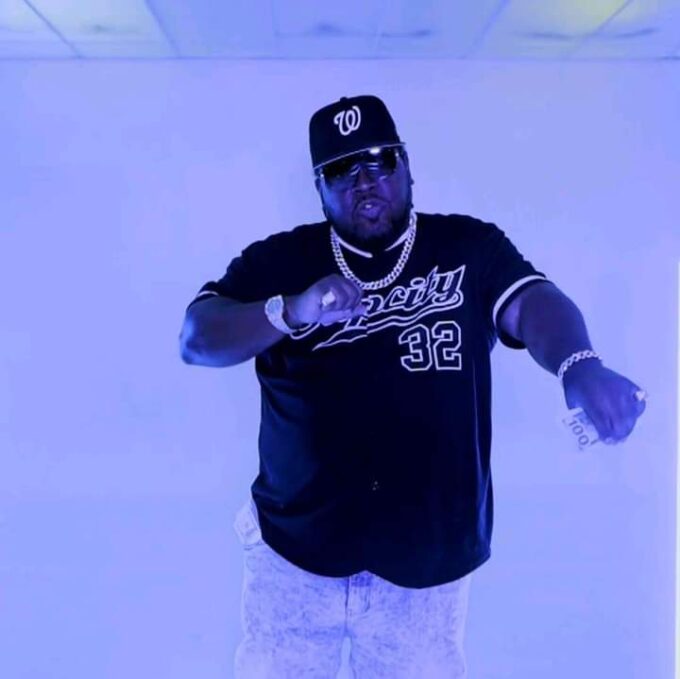
Raised in Wynnefield, a neighborhood in West Philadelphia, Newton is building a career across rap, acting, comedy, production, theater, and fashion. His ambitions extend well beyond releasing music, but the different parts of his work remain connected by one central idea: the determination to define himself before the entertainment industry defines him.
His 2026 album, The Night I Became Famous, may sound like the announcement of a breakthrough. Beneath that confident title, however, is the story of an independent artist who spent years preparing for a moment that could never be guaranteed.
Newton’s journey raises a larger question about creative success: Does an artist leave his hometown behind when he becomes successful, or does he carry its lessons into every room he enters?
For Newton, West Philadelphia is not simply the location where his story began. It appears to be part of the creative language through which that story continues to be told.
Learning to Perform Before the World Was Watching
Newton’s interest in entertainment began during childhood, influenced by the music, movies, and fashion of the 1990s.
That period offered a particularly powerful model for an aspiring multidisciplinary artist. Rappers appeared in films. Actors released music. Comedians became television stars. Fashion was not merely attached to entertainment—it helped communicate attitude, affiliation, imagination, and status.
Artists were expected to possess presence.
Newton was approximately 13 years old when he began teaching himself how to freestyle. At that age, the practice may have seemed like a form of expression or competition. In retrospect, it became something more important: an early lesson in believing that his voice deserved to be heard.
Freestyling demands immediate commitment. A performer cannot stop every few seconds to reconsider a line. He must respond to the rhythm, trust his instincts, and continue moving even when the next idea is not yet completely formed.
That mentality reflects the broader path Newton has taken.
There was no guaranteed record contract waiting for him. There was no certainty that years of mixtapes, showcases, performances, and creative experimentation would eventually produce significant recognition. Like many independent artists, he had to continue developing while the final destination remained unclear.
That experience can either weaken an artist’s confidence or make it more internally driven.
In Newton’s case, it appears to have done the latter.
Why Philadelphia Artists Often Develop Differently
Philadelphia’s contribution to American culture cannot be reduced to one musical style or historical period. The city has produced soul singers, battle rappers, comedians, actors, jazz innovators, filmmakers, dancers, and entrepreneurs. Its creative identity is built from several traditions existing beside one another.
That history matters when considering Newton’s range.
A rapper who also acts, performs comedy, produces music, and explores fashion may appear difficult to categorize elsewhere. In Philadelphia, those interests can be understood as parts of a longer culture of performance. The city has repeatedly produced entertainers whose appeal comes not only from technical ability but also from personality, improvisation, humor, and resilience.
Philadelphia artists are often expected to prove themselves in direct environments. Their work must connect in rooms where audiences are willing to react honestly. That pressure can produce a distinctive kind of performer—someone capable of adjusting quickly without losing his identity.
Newton’s theater background adds another dimension to that development. Theater requires patience, preparation, vocal control, movement, listening, and an awareness of how a performance reaches the audience. Unlike a recording studio, where mistakes can be corrected, the stage requires the performer to remain present from beginning to end.
Comedy demands a similar awareness. A joke can be well written and still fail if the timing is wrong. Rap, theater, and comedy therefore share an important characteristic: each depends on rhythm.
Newton’s versatility may be less scattered than it first appears. The same sense of timing travels with him from one medium to another.
The Night I Became Famous and the Psychology of Arrival
Released on June 5, 2026, The Night I Became Famous is a 12-track album running approximately 37 minutes. The project includes songs such as “Longest Summer Days,” “Endy’s Song,” “Twerk It,” “Ghetto Hottie,” “No More Nightmares,” and “The Best Song.”
The title makes an immediate declaration, but it also invites debate.
What does it mean for an independent artist to become famous?
The traditional idea of fame was once tied to major television appearances, radio rotation, magazine covers, and record-label promotion. Today, recognition is more fragmented. An artist can accumulate millions of views while remaining unknown outside a specific online community. Another can develop a loyal regional audience without achieving viral success. Visibility can arrive quickly and disappear just as fast.
Newton’s title exists inside that uncertainty.
The Night I Became Famous can be interpreted as a prediction—an artist naming the destination before he completely reaches it. It can also be understood as a fictional scene, as though the listener is entering a movie about one extraordinary night. On a deeper level, it may describe an internal transformation rather than a public event.
Perhaps an artist becomes “famous” to himself when he finally recognizes the value of everything he has built.
That reading makes the album more personal. It transforms the title from a boast into a statement of self-belief.
For an independent creator, that belief is necessary. There may be long periods when outside attention does not match the quality or effort behind the work. The artist must decide whether recognition creates value or merely confirms value that was already present.
Newton appears determined not to wait for outside approval before presenting himself with confidence.
An Album With Several Versions of the Same Man
The variety across The Night I Became Famous reflects Newton’s broader creative personality.
“Longest Summer Days” reveals a thoughtful and abstract side of his writing. Its title suggests nostalgia, distance, and the changing perception of time. Childhood summers can feel almost permanent, while adulthood moves with unsettling speed. That emotional idea creates space for Newton to be reflective rather than simply performative.
“Endy’s Song” similarly demonstrates a willingness to move beyond conventional expectations. It suggests that Newton is interested in using music to create atmosphere and character, not only to showcase technical rapping.
Records such as “Ghetto Hottie,” “Girl U Fine,” “Freak Love,” and the self-produced “Twerk It” occupy a more immediate space. They are built around movement, attraction, confidence, and social energy.
The contrast is significant.
Newton does not appear interested in presenting only the serious lyricist, the party-starter, the romantic figure, or the comedian. He allows these personalities to coexist. The album operates like a collection of scenes in which the central character behaves differently depending on the environment.
That may be where his acting instincts become audible.
An actor must understand that people contain contradictions. Someone can be confident in one scene and uncertain in another. He can be humorous, reflective, romantic, ambitious, or guarded without becoming a completely different person.
Newton’s music appears to embrace those shifts.
Instead of asking which version represents the “real” Handsome Newton, listeners might consider whether the complete identity can only be understood by seeing all of them together.
Producing the Environment Around His Voice
Newton’s self-production on “Twerk It” deserves particular attention because it expands his role in the creative process.
A rapper traditionally enters an environment created by a producer. The tempo, drums, melody, and mood already establish certain boundaries. The performer’s responsibility is to find the right voice within that setting.
When Newton produces his own music, he controls both the environment and his response to it.
That ability can become extremely valuable as his career develops. Production gives him greater independence, but it also provides a deeper understanding of why a record works. He can consider not only what he wants to say but also what the listener should feel before the first lyric begins.
This control connects to the larger direction of his career.
Newton is not only trying to appear inside finished products. He wants to participate in creating the products themselves. Whether the medium is an album, performance, film character, comedy concept, or fashion design, authorship appears central to his ambition.
That distinction separates someone seeking attention from someone attempting to build a body of work.
Can Detective Howard Change How Audiences See Him?
Newton is expected to portray Detective Howard in the forthcoming crime thriller Frames from the Streets. Although a confirmed public release date has not been widely established, the role represents an important opportunity.
The transition from music into acting is often treated as natural because both careers involve performance. In practice, the disciplines can demand opposite instincts.
A recording artist is generally expected to make himself memorable. An actor must sometimes make himself disappear.
If Newton wants viewers to believe in Detective Howard, charisma alone will not be enough. A detective character requires restraint, observation, authority, and an awareness of information that may remain unspoken. The performance must suggest that Howard possesses a life and professional history extending beyond the scenes shown on screen.
Newton’s theatrical experience could help him meet that challenge. Theater teaches an actor to understand motivation rather than simply recite dialogue. Every movement, pause, and change in tone should emerge from what the character wants.
The role could therefore become a meaningful test of Newton’s range.
Can an audience familiar with his music forget the rapper long enough to trust the detective? Can he reduce his natural performance energy when a scene requires silence? Can he communicate suspicion or conflict without explaining it directly?
If he succeeds, Frames from the Streets could establish acting as a serious part of his future rather than a temporary addition to his musical biography.
Clothing as a Declaration of Identity
Fashion has always played a major role in Newton’s presentation.
His appreciation for 1990s style appears connected to the freedom artists of that era used to create memorable identities. Clothing could communicate neighborhood, ambition, rebellion, humor, luxury, or originality before an artist said a word.
Newton intends to carry this interest forward through a hat line expected to debut near the end of 2026.
The challenge will be transforming personal style into a product with meaning for other people.
A celebrity name can create initial curiosity, but lasting fashion requires a stronger foundation. Consumers must connect with the design itself. The colors, materials, structure, symbols, and overall presentation must communicate an identity beyond the person promoting it.
Newton’s Philadelphia background could provide that identity.
The strongest version of the collection would not simply place his name on standard hats. It would connect the confidence of his music, the visual personality of his performances, the influence of 1990s culture, and the character of West Philadelphia into a recognizable design language.
If approached seriously, the line could become more than merchandise. It could become a physical extension of the world his music introduces.
The Responsibility That Comes With Representing a City
Being identified as a Philadelphia artist brings opportunity, but it also creates expectations.
A city’s reputation can help audiences understand where an artist comes from, yet no emerging creative should rely entirely on geography to establish significance. Representing Philadelphia requires more than mentioning the city. It means contributing something original to its continuing cultural story.
Newton must eventually answer what his particular contribution will be.
Will he become known primarily for music that balances humor, abstraction, confidence, and reflection? Will acting reveal a dramatic ability capable of opening larger doors? Will his production work evolve into a distinct sound? Could his fashion line establish an independent visual brand?
The answer may involve all of these pursuits, but growth will require more than ambition.
Range attracts curiosity. Consistency builds trust.
Newton’s next stage will depend on his ability to turn separate projects into a connected body of work. The album, film role, comedy, production, and fashion line should not compete for attention. Ideally, each will reveal another part of the same creative perspective.
That is the difference between having several talents and building a multidimensional career.
Leaving Wynnefield Without Leaving It Behind
Success stories are often described as escapes. An artist “makes it out,” reaches a larger stage, and leaves his old surroundings behind.
That narrative can be too simple.
A neighborhood is not only a physical location. It can remain in a person’s humor, instincts, language, standards, and ability to read a room. Artists may leave the streets where they grew up, but those streets can continue shaping how they respond to every new environment.
For Handsome Newton, Wynnefield appears to represent more than an origin point. It is where his interest in performance began, where his confidence was tested, and where the imagination behind his current ambitions first developed.
Now, the scale of those ambitions is growing.
The Night I Became Famous presents Newton as someone ready to be seen. Frames from the Streets may allow audiences to encounter him as a character. His planned hat line could transform his visual instincts into something supporters can wear. His comedy and production work demonstrate that he does not want to depend on only one form of expression.
The pieces are present. The question is how powerfully they will come together.
Can Newton build national recognition while preserving the character that made him distinctive? Can he expand without becoming generic? Can the confidence of his album title be converted into longevity, ownership, and cultural influence?
Those questions cannot be answered by one release.
They will be answered through the work that follows.
Handsome Newton’s story is not simply about a West Philadelphia artist attempting to become famous. It is about what happens when someone shaped by a specific neighborhood decides that his imagination no longer belongs within any single boundary.
Wynnefield gave him a place to begin.
Now he is trying to discover how far that beginning can take him.








Leave a comment