What does happiness really look like?
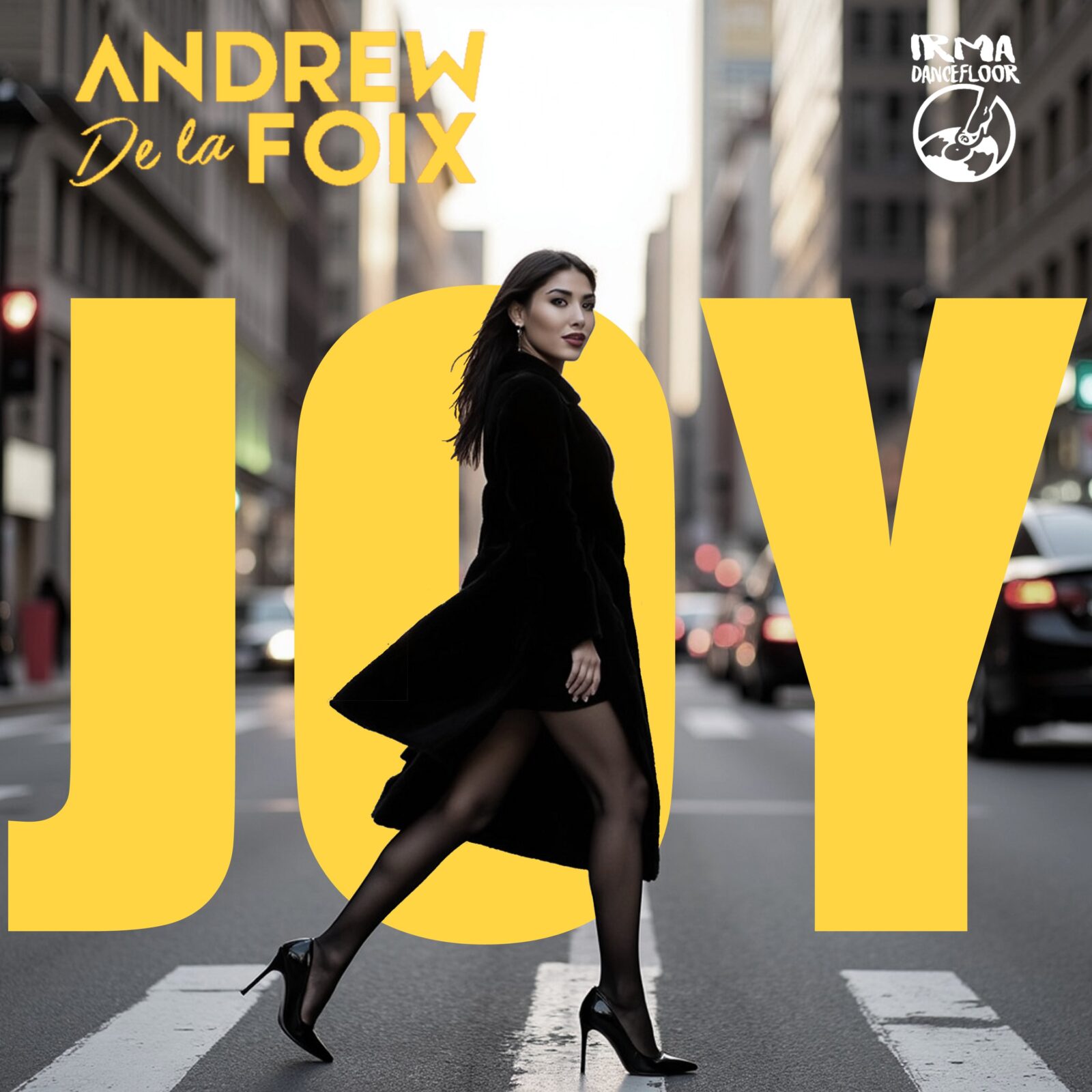
Is it found in life’s major milestones, or does it reveal itself in quieter, more unexpected moments? A shared smile, a spontaneous conversation, a memory triggered by a familiar melody, or a brief instant when everything simply feels right. These are the questions that seem to echo throughout Joy, the latest single from Italian producer, musician, and songwriter Andrew De La Foix.
At first listen, Joy arrives as an uplifting and elegant dance record. Warm piano chords, vibrant rhythms, rich harmonies, and carefully layered instrumentation create an immediate sense of positivity. The track feels inviting from the very beginning, drawing listeners into a soundscape that is both sophisticated and accessible. Yet beneath its polished production and infectious groove lies a deeper emotional message, one that gradually reveals itself as the song unfolds.
This ability to combine movement and meaning has become one of Andrew De La Foix’s defining artistic qualities. While many dance records focus primarily on energy and immediacy, Joy demonstrates how electronic music can also function as a vehicle for reflection, storytelling, and emotional connection.
Born in Rome, De La Foix developed a passion for music at an early age. Fascinated by sound, technology, and composition, he began experimenting with professional equipment while still very young. Over the years, his interests expanded beyond music alone, leading him to develop expertise in programming, engineering, production, and sound design. This unique combination of technical knowledge and artistic sensitivity continues to shape his creative approach today.
Rather than viewing technology as separate from artistic expression, De La Foix treats it as an extension of the creative process itself. Every production decision serves a purpose. Every sound, transition, and arrangement choice contributes to the emotional narrative of the song. This philosophy is particularly evident throughout Joy, where technical precision never overshadows the human element at the heart of the music.
His musical identity draws inspiration from multiple genres and eras. Elements of soulful house, disco house, jazz, funk, and contemporary electronic music coexist naturally within his productions, creating a sound that feels both timeless and modern. Throughout his career, De La Foix has continued refining this distinctive musical language through releases on respected labels including Groove Culture, Irma Records, Chic Records, and Way Up Records.
With each release, he has demonstrated an ability to balance classic musical influences with contemporary production standards. Joy may well represent one of the clearest expressions of that balance to date.
What immediately stands out about the track is its sense of progression. Rather than relying on repetitive structures or predictable arrangements, the song evolves organically. New textures emerge gradually. Melodic elements interact with rhythmic foundations in ways that maintain both momentum and emotional engagement. The production feels dynamic without becoming overly complicated, allowing listeners to connect with the music on both an instinctive and intellectual level.
One of the most compelling moments arrives when the track subtly shifts its emotional direction. Just as the listener becomes immersed in its uplifting atmosphere, a more introspective mood begins to surface. The groove remains intact, but the emotional perspective changes. Piano and guitar textures take on greater significance, while the drums continue guiding the listener forward.
This contrast becomes central to the song’s impact.
The recurring phrase, “Joy, little joy,” functions as more than a lyrical hook. It becomes the philosophical centre of the record. Rather than celebrating happiness as a permanent state or a grand achievement, De La Foix focuses on something smaller, more fragile, and perhaps more authentic. The phrase suggests that joy often exists in brief moments that cannot be controlled or possessed. Their value comes precisely from their temporary nature.
In a culture increasingly driven by constant ambition, social comparison, and the pursuit of larger goals, this message feels particularly relevant. Modern life often encourages people to delay happiness until some future accomplishment has been achieved. Joy challenges that mindset by reminding listeners that meaningful experiences are already present within everyday life.
The song never becomes overly sentimental or didactic. Instead, it communicates its ideas through atmosphere, texture, and emotional resonance. Listeners are free to interpret its meaning through their own experiences, making the record feel deeply personal despite its universal themes.
Another notable quality of Joy is its cinematic character. The music possesses a visual quality that allows it to transcend the boundaries of a typical dance track. It is easy to imagine the song accompanying scenes of personal discovery, reconciliation, hope, or transformation. The arrangement unfolds with the pacing of a film score while maintaining the rhythmic energy expected from a contemporary house production.
This cinematic sensibility contributes significantly to the track’s emotional power. Rather than demanding attention through dramatic gestures, the music creates space for reflection. It invites listeners into an experience rather than simply presenting a performance.
Perhaps this is what ultimately makes Joy so memorable. It understands that emotional depth does not require complexity, and that some of life’s most profound truths can be expressed through the simplest ideas. Happiness does not need to be permanent to be meaningful. A fleeting moment can leave a lasting impression.
With Joy, Andrew De La Foix delivers a record that successfully bridges the worlds of dance music and emotional storytelling. The track showcases not only his technical abilities as a producer and arranger but also his growing maturity as an artist capable of translating complex human emotions into accessible musical experiences.
As he continues to develop his distinctive blend of soulful house, disco influences, jazz-inspired musicianship, and modern electronic production, Andrew De La Foix is steadily carving out a unique position within today’s dance music landscape. His work demonstrates that sophistication and accessibility are not mutually exclusive, and that electronic music remains one of the most powerful mediums for emotional expression.
If Joy serves as an indication of his current artistic direction, Andrew De La Foix is entering an exciting new chapter—one defined not only by technical excellence, but by an increasingly confident and compelling artistic voice.